Why Government Policies Fail

Mr. Peter was deeply worried about his son, Samuel. Despite his best efforts, Samuel’s behavior was worsening by the day. In their neighborhood, Samuel had gained a bad reputation for stealing and picking pockets. This behavior continued at school, embarrassing Mr. Peter even further.

Mr. Peter tried his best to raise his children to be upstanding members of society. He was always at home with them, offering guidance and support. However, his efforts seemed futile, as his children continually went astray. Desperate for advice, he sought out an elder in the community. The elder listened patiently and then told him, “If you’ve done all you can to admonish and train your children but they still go astray, it means you are not setting a good example for them to follow.”

Mr. Peter was living a life that contradicted the values he was trying to instill in his children. Despite his lessons on honesty and integrity, he was frequently coming home with ill-gotten gains from his office. His meager salary couldn’t possibly support his luxurious lifestyle, complete with multiple cars and a hefty bank account. His children saw through his hypocrisy, and no amount of lecturing could make them respect values he himself did not uphold.

Mr. Peter’s situation is a microcosm of our government. Governments often try to instill discipline and introduce beneficial policies, but these efforts are undermined when leaders fail to live up to the standards they set for their citizens. No matter how beneficial a policy might be, if leaders are not above reproach, the citizens will not trust or follow them.

When leadership lacks integrity, it leads to a breakdown in societal trust and compliance. Citizens become impatient with policies, and in some cases, deliberately act out in defiance of the government. When this happens, it’s a clear sign that the government needs to reassess its actions and take responsibility. It means that business as usual is no longer acceptable.

Unfortunately, many leaders fail to recognize the signs of impending crisis. They do not see that public resources are depleting and that their continued corruption and extravagance could lead to anarchy. This article serves as a plea for the government to become responsible.

The truth is, leaders cannot uphold principles that they themselves do not adhere to. Societal transformation can only happen if leaders live in accordance with their policies and programs. We have often heard politicians call for citizens to understand the need for austerity, to accept meager salaries, and to endure project delays due to a lack of funds. However, these same politicians live opulent and extravagant lifestyles.

For example, the average Nigerian senator takes home more than 10 million naira a month, with some reports suggesting figures as high as 30 million. They expect citizens who earn as little as 50,000 naira to quietly accept this disparity. It’s like beating a child and expecting them not to cry.

Our leaders need to work towards providing a living wage for citizens. The average government official has a padded lifestyle funded by the public purse. Instead of cutting costs, their remuneration is constantly adjusted upwards to satisfy their insatiable greed.

For government policies to succeed, leaders must lead by example. They must embody the values they wish to see in their citizens. Only then can trust be restored, and societal transformation take place.

The truth is, we all need to adjust to accommodate the season we are in so that our nation can march toward preeminence in the near future. In the jungle, it’s not the strongest that survives, but the animal that can adapt. Similarly, we need to make some adjustments. These changes can help our nation shed the label of a third-world country.

The current season in Nigeria demands that everyone adapt or adjust in one way or another. By doing so, we can navigate this challenging era of hyperinflation and high living costs. Leaders, as the watchdogs of society, must lead by example. If they fail and continue to indulge in greed amidst scarcity, we will inevitably crash sooner or later.

Leadership’s essence is to provide direction to followers, and it’s time for our leaders to exemplify integrity and accountability. While it’s true that one cannot give what they do not have, this should not be an excuse for the cluelessness of our current crop of leaders, which has plagued us for decades. Many of them lack the merit to be called leaders, driven more by a propensity to loot than to lead.

It’s high time citizens began to seek out and support individuals who embody prudence, modesty, discipline, and frugality. We need leaders who, through their upbringing, understand how to live a life of deprivation and honesty.

With such leaders, citizens will naturally learn to defer gratification, adjust, and pave the way for future development. This will happen because they have role models who live by example. Unfortunately, with the current extravagant lifestyle of our leaders, the situation is dire. In time, things will fall apart because the center is already on the verge of breaking.

Let us not forget the purpose of this message: whatever leaders want from their citizens must begin with them. This is the benchmark of responsible leadership. As a note of warning, if we don’t change, the crisis we create over time will change us and humble us to nothingness. We should not wait for the pain of irresponsible leadership to force this change upon us.


THE KEG OF GUNPOWDER AND THE RULE OF LAW: TOWARDS MAKING EFFECTIVE LAWS

It is a stark truth that laws made to prevent a hungry lion from killing a goat will not hold. This principle applies equally to human beings. When people are pushed beyond their limits, they will not comply with laws but will instead break them to meet their basic needs. As the saying goes, “When the goat is pushed to the wall, it knows its control is over.”

Similarly, when a government fails in its responsibilities, it risks losing the respect, honor, and loyalty of its citizens. At a certain point, the very masses the government aims to lead will rise up against it. By then, it may be too late to correct course, and control will be lost to the populace. If the government allows such a situation to escalate, leaders and politicians may find themselves fleeing from a rampaging flood of public anger. It is imperative that the leaders of our country recognize this potential and take steps to prevent it.

Political truth dictates that when the masses lead, there is often great devastation. The average person may lack the sophistication and strategic vision necessary to guide a nation forward effectively. This is why it is crucial for leaders to fulfill their roles responsibly.

The only sustainable way for a government to maintain control is to ensure that it provides a good quality of life for the common man and meets the basic needs of its citizens. The average person’s needs are minimal, and addressing these can secure the government’s position and maintain order.

The Threshold of Endurance

When the limit of endurance is breached, nothing can prevent citizens from exploding in unrest. The fact that the common man can endure hardships for a long time, as seen in the case of Nigeria, does not negate the reality that there is a threshold beyond which the law will no longer hold. This threshold is crossed when government failures and a lackadaisical attitude towards governance become extreme. Unfortunately, Nigeria is fast approaching this critical point.

Effective laws and governance require more than mere legislation; they demand a commitment to meeting the basic needs of the populace and governing with integrity and compassion. By doing so, leaders can maintain control and avoid the devastating consequences of public unrest. Let us hope and pray that our leaders will heed these truths and steer our nation towards a prosperous and stable future.

Our leaders are well aware that Nigeria is a country rich in resources and potential. However, if the bounty and abundance of this nation continue to be looted day in and day out, a time will come when the citizens will rise and demand accountability. When that time comes, the laws that were made to oppress and control the populace will be ineffective.

When the signs of civil disobedience begin to emerge, it serves as a clear indication that, sooner or later, lawlessness will pervade the land if the leaders fail to take appropriate action. It is a grave deception for leaders to believe that all is well when poverty is growing at an alarming rate and when average citizens are desperate to flee their native land to seek better lives in foreign countries. These are two ominous signs that require serious consideration and prompt action.

As a leader, you can only enact effective laws when you first make provisions for the well-being of your followers. Failing to do so reveals the extent of the power that the followers themselves wield. Without providing for the basic needs of the people, any laws made will be seen as oppressive and will likely lead to increased lawlessness.

To illustrate this point, consider the following examples:

1. Provision Before Legislation: When laws are enacted without providing adequate alternatives or provisions for the citizens, such laws often result in greater unrest and disobedience. It is far safer to leave the situation as it is than to impose laws that exacerbate existing hardships.

2. Historical Context: Throughout history, we see that societies where leaders fail to address the basic needs of the populace experience significant turmoil. When citizens are left in poverty and desperation, they are more likely to rebel against unjust laws and oppressive regimes.

It is crucial for our leaders to recognize these signs and take proactive measures to address the needs of the people. True leadership involves not only creating laws but also ensuring that those laws are supported by adequate provisions that promote the welfare and prosperity of all citizens.

As leaders, it is essential to create an environment where citizens feel valued, provided for, and respected. Only then can we hope to build a stable, prosperous, and just society.

Addressing Poverty and Law Enforcement: A Case Study from Nigeria

Several years ago, a governor in a Nigerian city embarked on a mission to dislodge street hawkers from a popular location. The aim was to enhance the city’s aesthetic appeal. However, this policy was implemented hastily, without providing viable alternatives for the hawkers. Throughout his eight-year tenure, this initiative proved to be a significant challenge. Despite continuous efforts to enforce the law, the lack of alternative provisions led to persistent issues and a failure to achieve the desired results. The government expended considerable time, human effort, and material resources, but ultimately, the people prevailed.

A Tale of Two Governors

Governor One: The Struggle without Alternatives

The first governor faced an uphill battle as he attempted to remove hawkers from the streets without offering them alternative spaces. This oversight resulted in continuous resistance from the hawkers, making it impossible to enforce the policy effectively. The absence of a well-thought-out plan led to wasted resources and a failed policy.

Governor Two: Success through Strategic PPlannin

In contrast, his successor adopted a more strategic approach. Within four years, the new governor achieved what seemed impossible. He created designated spaces for the hawkers and enforced the policy only after these alternatives were in place. This proactive strategy led to the successful relocation of the hawkers, significantly improving the city’s aesthetics without causing undue hardship.

Additionally, the second governor addressed the rampant issue of kidnapping through the transport system by building motor parks. He mandated that passengers use these parks to board vehicles, thereby enhancing security and control. This approach of providing alternatives before enforcement proved highly effective.

The Federal Government’s Policy Failures

Examining the federal government’s recent policies reveals similar missteps. The government’s attempt to control cryptocurrency amidst growing poverty backfired. Instead of curbing its use, the government’s actions inadvertently increased awareness and interest in cryptocurrency. Within a month of enforcing strict regulations, even local traders and artisans began exploring how they could benefit from crypto trading.

A recent campaign, “Tap Your Way to Wealth,” further highlighted the disconnect between policy and reality. People from all walks of life—housewives, business people, students, and artisans—armed with Android phones, downloaded various apps, hoping to make quick money from the crypto world. This response was a direct result of economic hardship. If the economy were healthier and poverty had been mitigated, such desperate measures would not have been necessary.

Another manifestation of poverty is the proliferation of betting centers instead of industries. This trend underscores the lengths to which individuals will go to find alternative means of income when their basic needs are unmet.

The core issue is that poverty drives individuals to seek unstable sources of income, such as cryptocurrency trading and betting. When basic needs are unmet, people turn to these risky ventures out of desperation. Conversely, when citizens can meet their basic needs, they are less likely to engage in such activities.

We must urge the government to focus on improving the lives of the common man. Laws and policies must be designed to uplift the economically disadvantaged. Without addressing the root cause—poverty—any attempt at regulation will lead to restlessness and potential anarchy. A time will come when leaders will be unable to quell the tempest of the suffering masses.

In conclusion, the key to creating a stable and prosperous society lies in raising productive citizens. Empowering individuals to create their own wealth will reduce their attraction to get-rich-quick schemes. When citizens can earn a stable income, they become better custodians of laws, rules, and regulations. By providing vision and support, we can foster a society where laws are respected, and prosperity is achievable for all.

HOW CORRUPTION BECAME A MONSTER IN THE CIVIL SERVICE

I am going to discuss the pervasive issue of corruption in the civil service through the lens of a story, illustrating how it has insidiously overtaken the system and affected the entire fabric of our nation.

Ahmed’s Story: A Journey Through Corruption

Ahmed was a young, idealistic man who secured a job in the civil service. He was ecstatic about his new role and vowed to be an outstanding and conscientious employee. Ahmed was assigned to the tax department, where he and his colleagues were responsible for ensuring that tax defaulters were fined and compelled to pay up.

Initially, Ahmed believed that his salary of ₦85,000, based on the minimum wage, would be sufficient to support his wife and family. However, the rising inflation soon made it clear that this amount was grossly inadequate.

Monthly Expenses: The Reality Check

To understand Ahmed’s predicament, let’s take a closer look at his monthly expenses:

Transportation: Ahmed lives about four kilometers from his office. His daily commute costs him ₦2,000. Over the course of a month, he spends more than ₦40,000 just on commuting. Including other transport-related expenses, this amount easily exceeds ₦50,000.

Utilities: The family’s power bill is ₦20,000 per month.

Daily Living Expenses: Ahmed’s family of four needs approximately ₦5,000 per day for food and other essentials, totaling around ₦150,000 per month.

Other Expenses: Costs for clothing, education of his children, housing, and miscellaneous expenses add up significantly.

In total, Ahmed’s monthly expenses amount to approximately ₦350,000 to ₦400,000. His salary, however, remains at ₦85,000, leaving a substantial shortfall.

The Descent into Corruption

Faced with this financial gap, Ahmed began to look for ways to supplement his income. In his role at the tax department, the average fine for tax defaulters is ₦25,000. Ahmed saw an opportunity to bridge his financial shortfall by soliciting bribes. Instead of requiring defaulters to pay the official fine, he would demand ₦5,000 to be paid into his personal account. On an average day, Ahmed handles between 10 and 20 cases, making a minimum of ₦50,000 daily. This translates to over a million naira every month, all siphoned from the government.

The Broader Implications

While it’s easy to vilify Ahmed, his story is reflective of a much larger issue within the civil service. Ahmed represents the average civil servant who, faced with insufficient wages and rising living costs, resorts to corruption to make ends meet. This systemic problem underscores the need for significant reforms to address wage inadequacies and to establish robust anti-corruption mechanisms.

To combat the monster of corruption in the civil service, there must be a concerted effort to improve wages, implement stringent anti-corruption policies, and promote a culture of integrity and accountability. By addressing these root causes, we can begin to dismantle the systemic corruption that undermines our institutions and the trust of the public.

Addressing Corruption and Low Wages in the Civil Service

In Nigeria, many civil servants find themselves in a difficult situation where the minimum wage is insufficient to meet their basic needs. As a result, some, like Ahmed in our narrative, resort to unethical means to supplement their income. This unfortunate reality reveals a deeper systemic issue within our government and leadership structures.

The Dilemma of Civil Servants

The average civil servant, faced with financial hardship, often resorts to leveraging their office to generate additional income. This may include misusing office resources or even working another job during office hours. The minimum wage, currently set by the government, fails to provide a livable income, pushing individuals to find alternative ways to make ends meet.

Impact of Government Policies

The root of this problem can be traced back to our leaders and government policies. By not providing adequate wages, the government indirectly fosters an environment where civil servants feel compelled to engage in corrupt activities. Jobs such as those in the police force, customs, immigration, and revenue collection are particularly susceptible. If these individuals are not compensated fairly, they will inevitably find other means to cover their expenses, often through unethical practices.

The Necessity of Adequate Compensation

For real change to occur, the government must create an environment that includes fair wages sufficient to cover the average expenses of civil servants. This is a crucial step towards reducing corruption. Adequate compensation would not only reduce the temptation for civil servants to seek alternative, often dubious, sources of income but would also allow them to focus on their primary duties.

The Cost of Underpayment

The government should carefully analyze the financial losses incurred due to corruption and inefficiency stemming from inadequate pay. An underpaid employee is more likely to steal or find ways to supplement their income at the expense of their primary job. Many civil servants, after marking their presence in the morning, leave their posts to engage in other income-generating activities, such as transportation or farming. This not only affects their productivity but also undermines the integrity of the civil service.

Leadership and Integrity

Furthermore, our leaders must set an example by avoiding the temptation of embezzlement and theft. Funds that are misappropriated could significantly improve the lives of civil servants. By demonstrating integrity and prioritizing the welfare of their employees, leaders can foster a more ethical and effective civil service.

Conclusion

The journey to curbing corruption begins with ensuring fair remuneration for civil servants. By paying employees appropriately and fostering a culture of integrity, the government can significantly reduce the prevalence of corruption and enhance the overall effectiveness of the civil service. It is essential for the leaders to take proactive steps in this direction to ensure a just and prosperous society for all.

Written by

WALE ADEWUMI

Slides – Chapter 10

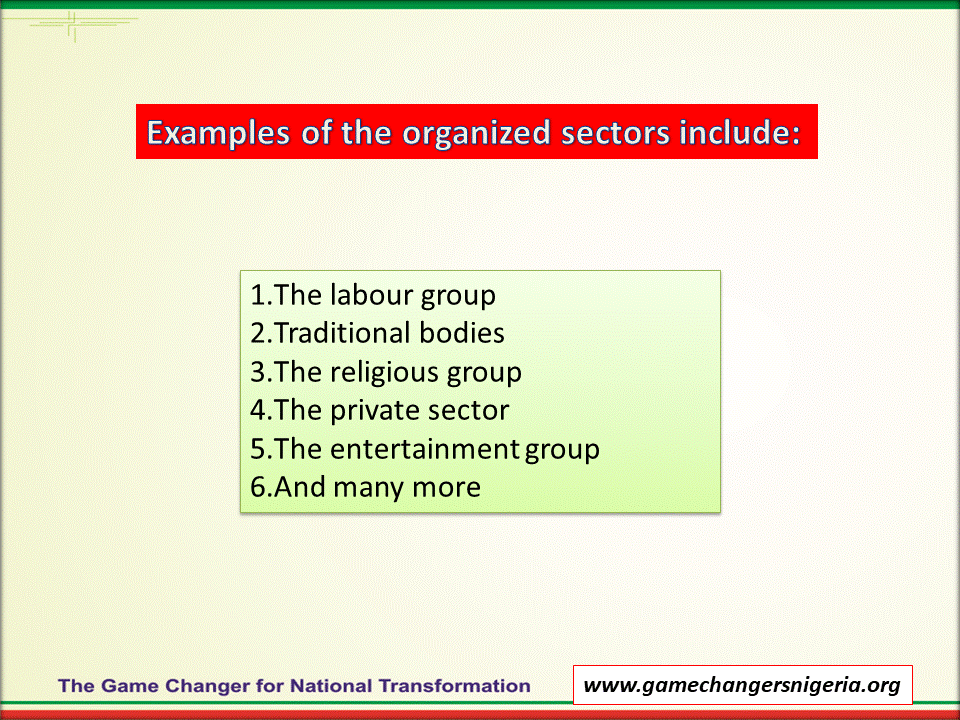
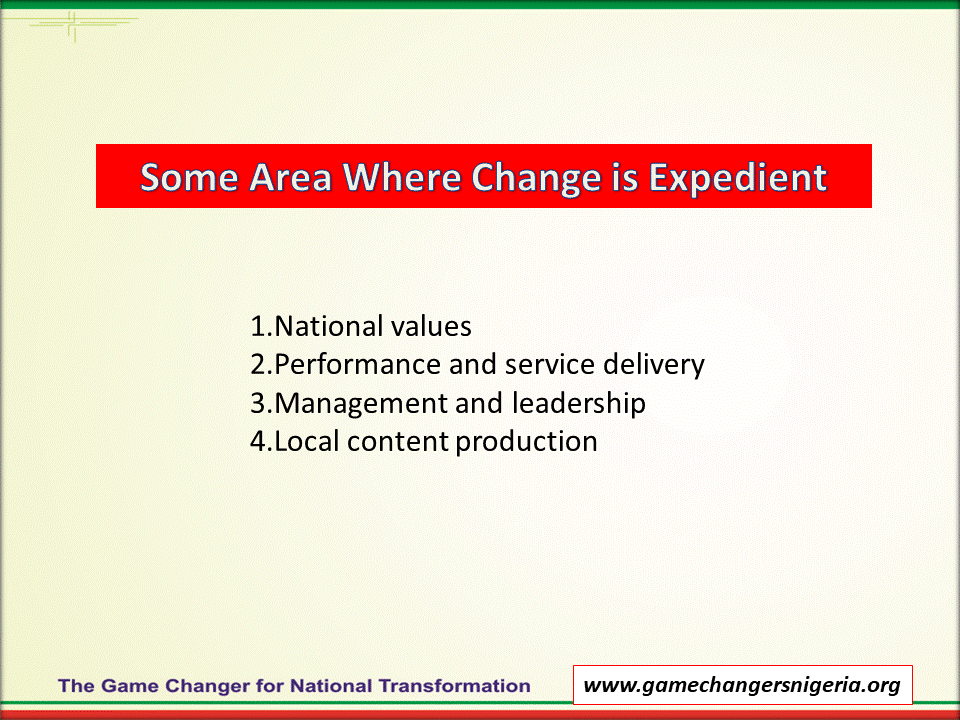
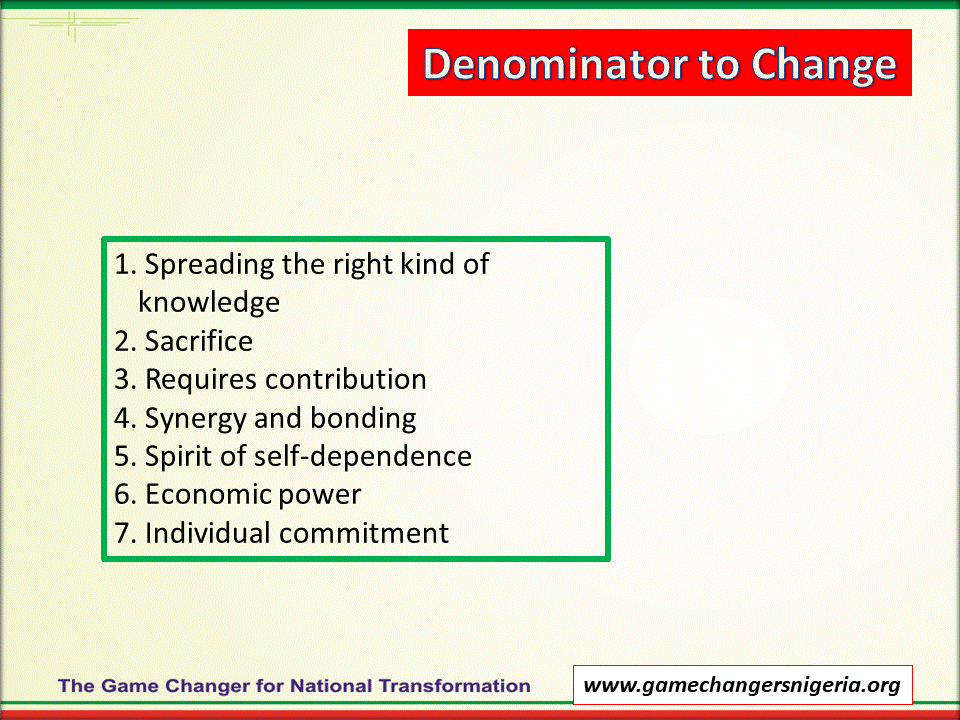
Although the individual holds the power for transformation, he cannot act in isolation. He needs to promote the desired changes through an organized platform or community.

Every system that contributes to the environment will be sustained. Those that take unduly diminish its world.

As the citizens are empowered, the leaders find means of engaging them and making them give back or contribute to their community.

God who created all, will want leaders who will help in the presentation of his creation.

Slides – Chapter 9

Continue in Chapter 10

Slides – Chapter 8

Continue in Chapter 9

Slides – Chapter 7

We have equal power because of our voting rights but by submitting it to the wrong candidates, we could lead our way to slavery.

If rigging is permitted or condoned in our elections, we have laid a wrong foundation that cannot offer great leadership delivery.

The extent to which rigging takes place will tell about what to expect in the coming days.

Ask yourself: How many times have you voted after a clear conscience for good governance, not minding ethnicity or religious difference.

The degree to which you condone bias in your decision tells of your sincere readiness for good governance

The essence of leadership is to steer society towards advancement. Virtue is a critical index to measure whether a leader will deliver or not.

If the leaders of our various institutions will stand for what is right, our nation will begin to give birth to quality leadership delivery.

No leader suddenly emerges except with the support of critical stakeholders. This is why the kind of leaders in a society is often never accidental.

Never to the path of ethnic or religious conflict. They are tools for dividing the masses for their gain.

Those who set us against one another eat at the same table.

Continue in Chapter 8

Slide – Chapter 6

In building great nations, the people need to find things that bind them than things that divide them. The more divided a people the more easily they will fall.

Diversity has to be well managed. A society that allows inclusion will be opened to growth and prosperity.

Whoever divide you is seeking to profit from it. The weaker the band that knit a society, the weaker they become.

Let’s learn from the advanced nation, they seek to accommodate people from different parts of the world.

When a society is divided it will not be able to stand or forge a better world for its citizens.

Continue in Chapter 7 here

Slides – Chapter 5

A retrogressive society has unconsciously adopted some negative cultural practices. All cultures don’t serve positive ends. For a society to truly transform, it must also intentionally transform it’s culture.

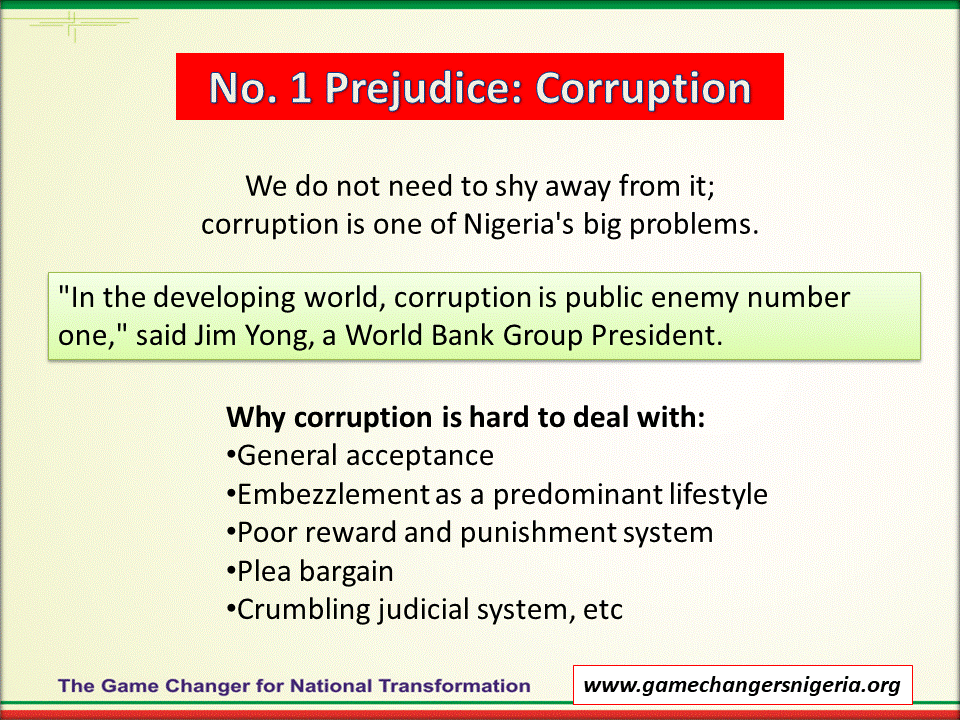
Note: Corruption and graft could be said to be one of the negative cultures in Nigeria.

Corruption is sustained and growing in leap and bound because the system supports it.

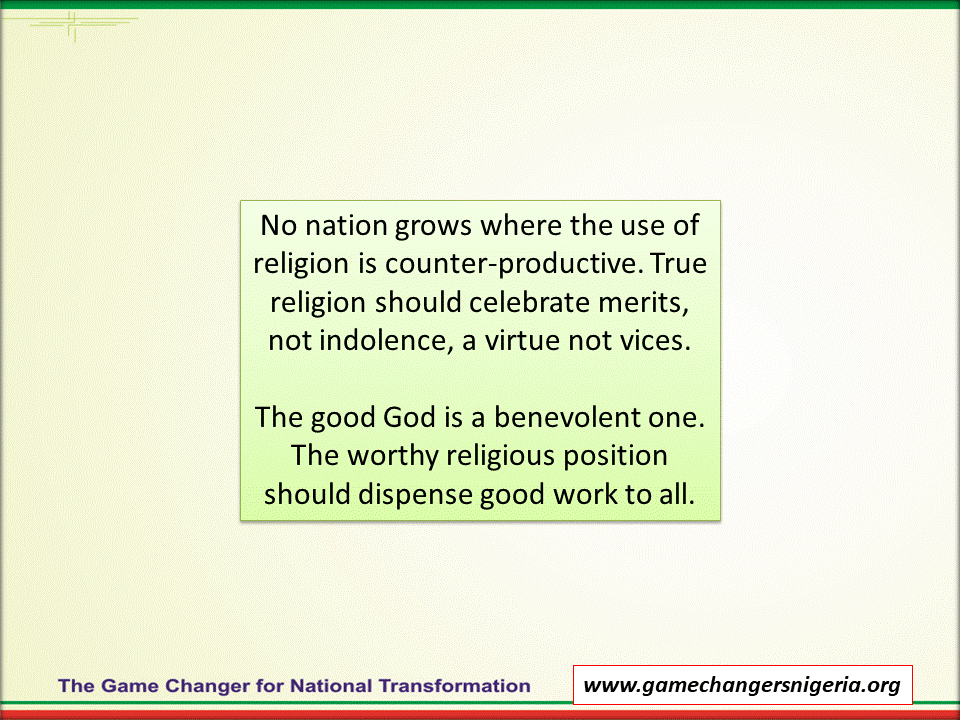
An advancing society will seek to make use of its numerous religions for a positive end. Every aspect of our religious practices that is inimical for growth should be discouraged. The positive aspect should be encouraged. A true practice of faith brings forth growth, progress and abundance.

The superior use of ethnicity is the promotion of virtue among its people. To use ethnicity as a coverup for greed and stealing from others is daylight robbery.

When weakness is promoted over merit, the entire system will soon or later crumble. A chain break at the point of weakness. The seed of weakness can only bring forth more weaknesses.

This is simply common sense. Unfortunately, common sense is not truly common.

If you are not bringing value to the table, you are a robber. Sincerity in leadership is to begin to think of how all sides will bring commensurate values to the table.

Pride is restored when people begin to labour profitably as they feed from their sweat.

Continue in Chapter 6

Slides – Chapter 4

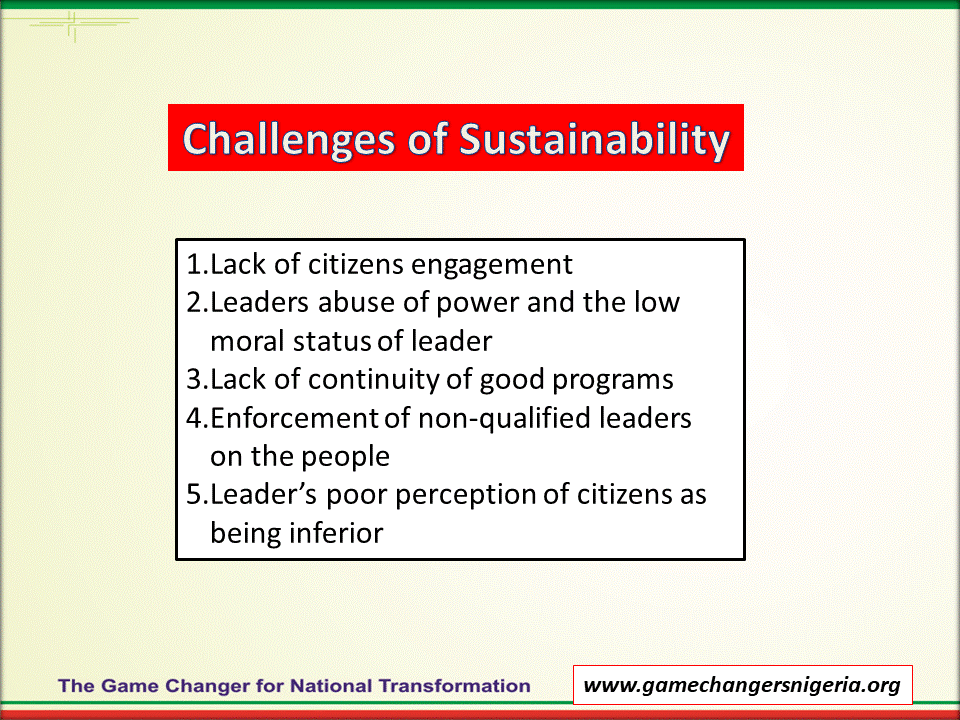
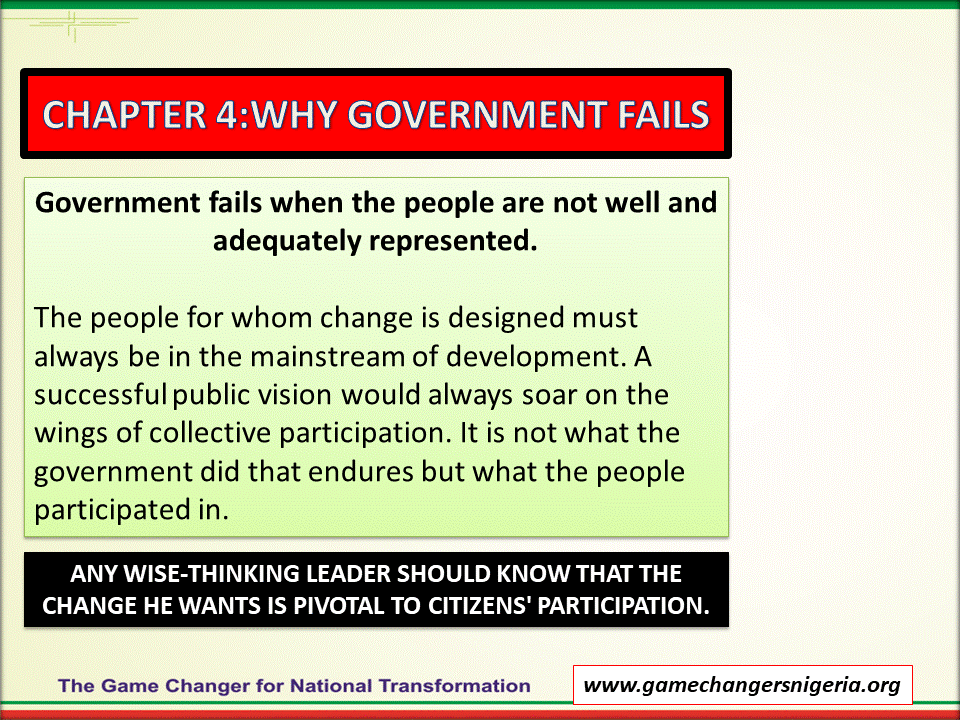
For any policy to be sustained, the people must be involved. Nobody can singlehandedly bring changes to a nation; there would be partnerships and collaborations all the way.

Ultimately, leadership kind tolerated will determine the final estate of a nation.

The average Nigerian celebrates mediocrity in leadership, ethnic bigots and separatists are having a field day. We often get satisfied when the loot is close to our end.

Bad leaders subtly use the wants of the people to cage them such as their ethnic and religious leaning. Then they deprive the people of the real need for self-development, empowerment and development.

Until we are told that productivity is the royal pathway to freedom, the citizens will never know true liberty.

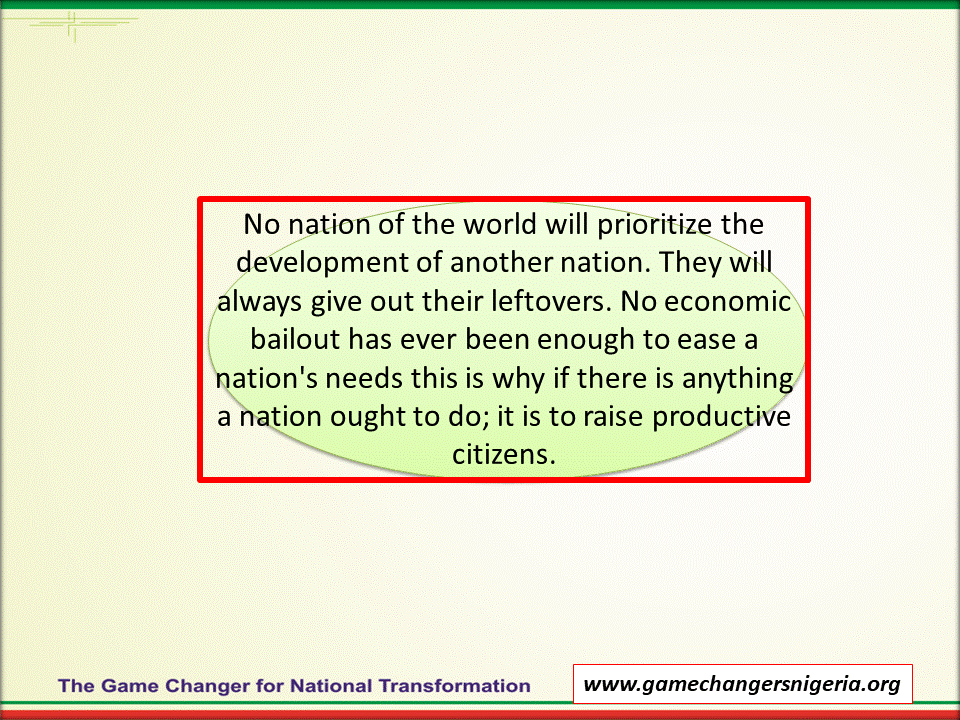
When we think it a right to continue to receive aid and conventions from frontline nations we will remain underneath. In the same light, we should create products in which we have comparative advantages to exchange for what we consume from the world.

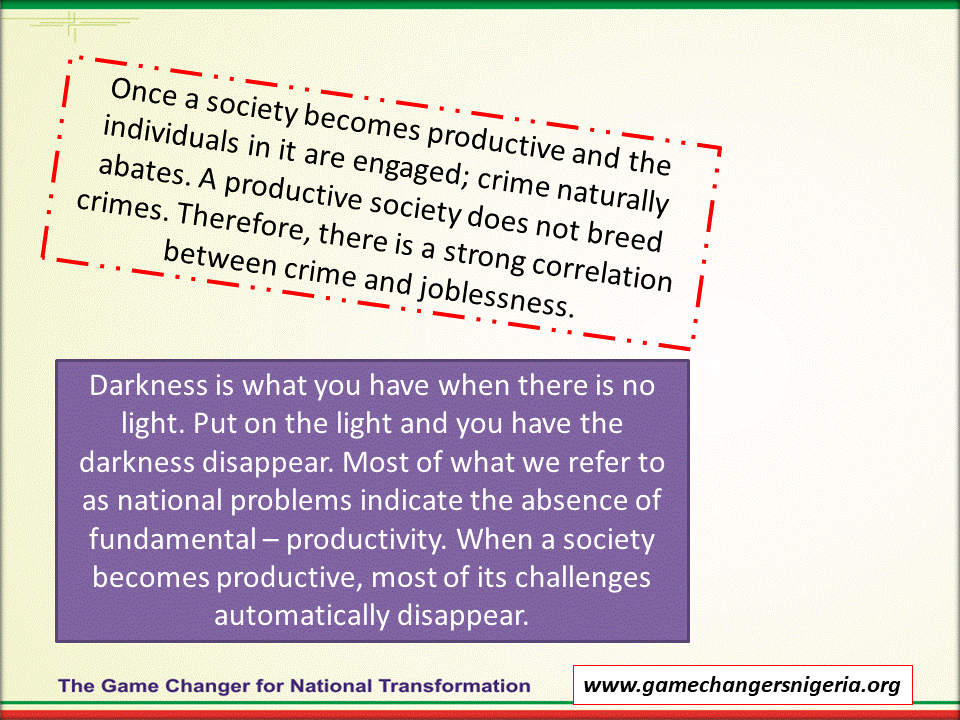
Productivity is the shortcut to putting an end to most vices in the world.

Nobody will come and build Nigeria for us. Nigerians will build Nigeria just like America is being built by Americans.
Continue in Chapter 5